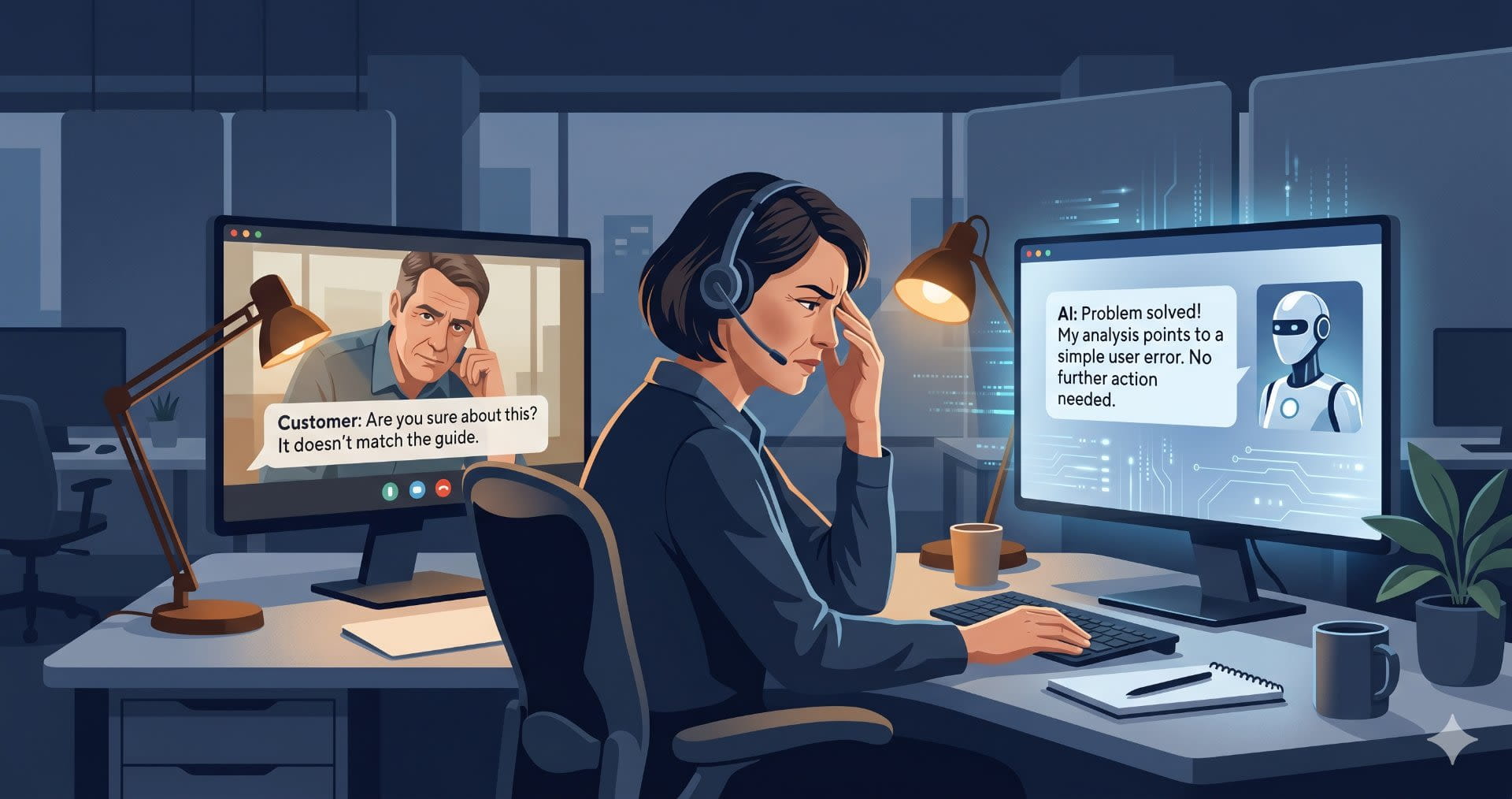
It's Saturday morning. You've decided to leave your phone in the kitchen drawer all weekend — no scrolling, no checking, no "just five minutes." By noon, you've picked up the phone four times before remembering you put it away. By 3 PM, you're genuinely anxious. Not bored. Anxious. You keep feeling phantom vibrations in your pocket even though the pocket is empty.
This is what digital minimalism actually feels like at the start. Not peaceful. Not like a forest walk. Like withdrawal.
That reaction — the restlessness, the reaching, the low-grade unease — tells you something important about what your device has become. Not a tool you use. A background state your nervous system has learned to expect. And that distinction matters more than almost anything else in this conversation.
What Attention Restoration Theory Actually Says
In the 1980s, psychologists Rachel and Stephen Kaplan developed what they called Attention Restoration Theory. The idea: your brain has two modes of attention. Directed attention — the kind you use to read, solve problems, focus on a task — depletes with use. Involuntary attention — the kind that kicks in when you watch rain on a window or hear birds — restores it.
The problem with smartphones is that they hijack involuntary attention. You're not using directed attention to scroll Instagram, but you're not restoring it either. You're stuck in a third zone: passive stimulation. Low-effort input that neither taxes you nor restores you. Just... fills the space.
A 2019 study published in JAMA Pediatrics found that higher screen time in young children was associated with lower measures of executive function — specifically, the ability to sustain attention. That's directed attention being squeezed out. A separate study from UC San Diego estimated the average American processes the equivalent of 34 gigabytes of information per day, most of it from screens. Not reading. Not learning. Just absorbing.
When you reduce phone use, the first thing that returns isn't joy or clarity. It's the capacity to be bored without reaching for something. That sounds small. It isn't.
The 30-Day No-Social-Media Experiment
Thousands of people have documented no-social-media experiments. The patterns are remarkably consistent — and more interesting than the "I felt amazing!" version usually shared online.
The first week is disorienting. Most people report checking apps out of habit, then feeling oddly dislocated when the apps aren't there. One commonly reported experience: sitting in a waiting room and not knowing what to do. Not wanting to just sit there. The discomfort of unstructured time — time that used to get auto-filled — is real.
Week two shifts. The reflex weakens. People start noticing their physical surroundings more — not in a mystical way, just practically. A conversation with a coworker goes longer than usual. A book that had been sitting half-read for months gets finished.
By week three and four, what most people report is not that life is suddenly better. It's that they can tell the difference between feeling good and feeling stimulated. These are not the same thing. Scrolling produces stimulation. A slow dinner with a friend produces something quieter but more durable. Most heavy phone users have lost the ability to distinguish between them.
Cal Newport, who popularized the term "digital minimalism," describes this as recovering your ability to choose — rather than just respond. That framing is more accurate than "quitting tech." It's about agency, not abstinence.
The Phone-in-Another-Room Effect
Here's one of the more counterintuitive findings in attention research: the mere presence of a smartphone on a desk — even face-down, even silent — reduces available cognitive capacity. A 2017 University of Texas study tested this directly. Participants who left their phones in another room performed significantly better on concentration tasks than those who had phones on the desk or in their pockets. Even when the phone never buzzed. Even when they didn't look at it once.
Just knowing it's there consumes working memory.
This is worth taking seriously — not as a reason to feel bad about yourself, but as practical information. If you're trying to do real thinking — writing, planning, reading something difficult — having the phone elsewhere isn't a discipline exercise. It's a cognitive upgrade. The improvement isn't marginal. In the UT study, the desk-phone group showed significantly lower working memory capacity. Full stop.
The experiment you can run tonight: put your phone in the bedroom before dinner. Leave it there for the evening. Notice what happens to the quality of conversation, or to how long you can sit with a book. The change is usually detectable within a single evening. You don't need thirty days to feel this particular shift.
What Doesn't Change (The Part Nobody Tells You)
Let's be honest about something.
Digital minimalism is significantly harder when your social life, your community, and your sense of belonging are primarily online. For a teenager in a rural area, Snapchat and Discord aren't distractions from real connection — they are real connection. For someone navigating a mental health struggle, an online support community might be genuinely sustaining. For a freelancer whose clients communicate on WhatsApp at all hours, "phone in another room" isn't a life hack — it's a professional risk.
The minimalism literature, which skews heavily toward well-resourced professionals with stable in-person social lives, doesn't always reckon with this honestly. Newport himself acknowledges it briefly, but the mainstream discourse mostly doesn't. That's a gap.
And even for people with robust offline lives, some things don't change much after cutting screen time. The underlying anxiety that made you reach for the phone in the first place — that doesn't disappear because the phone does. Neither does loneliness, or restlessness, or the feeling that something is slightly wrong that you can't name. The phone was a response to those things, not their cause. Removing it just means you're now sitting with them directly.
That's not an argument against digital minimalism. It's an argument for not expecting it to solve the wrong problems.
What Actually Works: Specific Practices Worth Trying
Broad resolutions — "I'll use my phone less" — almost never stick. Specific constraints do. Here's what the research and reported experience actually supports:
- Charge your phone outside the bedroom. Sleep quality is the most consistently reported improvement among people who do this. The reason isn't just blue light before bed — it's removing the morning reflex of checking before you've had a single uninterrupted thought of the day. A cheap alarm clock costs about 400 rupees. Worth it.
- Remove social apps from your home screen. Not deleted — just buried. The friction of three extra taps is surprisingly effective. Habits require easy access to fire. Make them slightly inconvenient and the reflex weakens.
- Set a specific no-phone block each day. Not "I'll use it less" — something concrete like 7 AM to 9 AM, or after 9 PM. Two hours of genuinely phone-free time daily adds up to over 700 hours a year. That's 700 hours of directed attention available for something you actually chose.
- Turn off all notifications except calls and messages from real people. App notifications are engineered to create urgency. None of them are actually urgent. Instagram likes are not urgent. News alerts are not urgent. Muting them is not ignoring the world — it's choosing when you engage with it.
None of these require a dramatic break or a tech detox retreat. They're small structural changes that shift the default without asking you to become a different person.
The Honest Part
There's a version of digital minimalism that becomes its own form of performance. People who announce their social media breaks, document their phone-free weekends, and curate a visible identity around using technology intentionally. That irony isn't lost on anyone.
And the promised outcomes — deeper focus, more creativity, richer relationships — don't arrive on schedule. For most people, the first few weeks of reduced phone use are just uncomfortable and duller than expected. The richness, if it comes, comes slowly. It doesn't announce itself.
What I think is actually true: your phone has eaten a significant portion of your attention budget, and you've largely stopped noticing because the depletion is gradual and the stimulation is constant. Reducing that isn't a lifestyle upgrade. It's more like recovery of something you didn't realize you'd lost.
You don't have to quit. You don't have to do a detox. But putting the phone in another room while you eat dinner is free, takes thirty seconds, and the research is clear on what it does. Start there. See what you notice.
The anxiety you felt on that phone-free Saturday? That was information. The question is what you do with it.