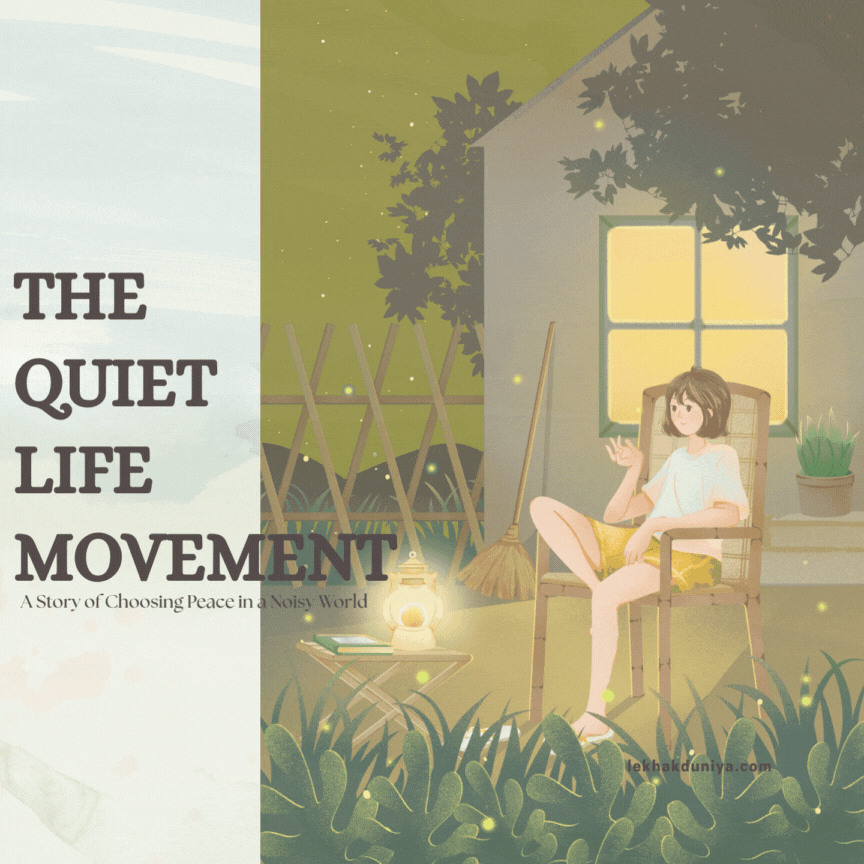
The first meal you cook entirely for yourself is pasta. Or maybe it's dal chawal. Or maggi at 10 pm. Whatever it is, you sit down with it at a table that fits four people, and the silence hits differently than you expected. You had imagined this moment as peaceful — maybe even cinematic. A book open beside you, warm light, the satisfaction of independence. What you didn't expect was to keep glancing at the other chairs and feeling something you couldn't quite name. Not loneliness exactly. Just... the particular strangeness of space that was yours to fill.
That moment is what living alone actually is. Not the aesthetic Instagram version. Not the horror story version either. Something more layered, more honest, and — once you stop fighting it — more interesting than either extreme.
The Version They Sell You
There's a very specific fantasy around living alone. You've seen it: the clean apartment, the morning coffee ritual, the freedom to eat cereal for dinner without explaining yourself to anyone. And look — that part is real. It exists. Freedom is real.
But the fantasy skips a few things.
It skips the first weekend where you have absolutely nothing you have to do and no one you have to see, and instead of feeling liberated you feel slightly untethered. It skips the 2 AM sound that you cannot identify and have no one to ask about. It skips the low-grade anxiety of assembling furniture without someone to hold the other end.
The romanticised version of living alone is designed around a person who already knows who they are. The real version is a slow process of figuring that out — and that process is messier, more uncomfortable, and ultimately more valuable than any Instagram reel suggests.
Freedom and Loneliness Are Not Opposites
Here's something that takes a while to understand: you can feel genuinely free and genuinely lonely in the same evening. These two things don't cancel each other out. They coexist, and trying to pick one as the "real" feeling is the wrong approach.
A 2019 study published in PLOS ONE found that loneliness is not simply about being alone — it's about the gap between the social connection you want and the social connection you have. Which means you can live with five people and feel desperately lonely, and you can live alone and feel deeply connected to your life. But it also means loneliness when living alone is a real and valid experience, not a character flaw.
What changes over time isn't that the loneliness disappears. It's that you stop treating it as an emergency. You get better at recognising when you need to call a friend versus when you just need to sit with the quiet for a bit. That distinction — between solitude and isolation — is one of the more useful things solo living teaches you.
And once you learn it, you carry it everywhere.
The Skills Nobody Warns You About
You'll learn to cook. Or order efficiently. You'll learn which grocery quantities don't result in waste and which ones leave you staring at half a bunch of coriander going questionable colours by Thursday.
But the practical stuff isn't the interesting part.
The interesting part is what happens to your relationship with yourself when there's no one else to perform for. When you live with others — family, roommates, anyone — there's an ambient social performance happening at all times. You present a version of yourself. You negotiate the household mood. You're never entirely off.
Living alone removes the audience. And that's destabilising at first. Some people fill the silence immediately — podcast on, TV running, calls every evening. That's not wrong, it's just worth noticing. Because the people who eventually learn to sit in genuine quiet, even occasionally, tend to come out of solo living with a clearer sense of who they actually are outside of other people's perceptions of them.
You also become, for better or worse, the only person making decisions about your space and time. That sounds straightforward until you realise how much of your previous decision-making was shaped by compromise. When it's only you: what do you actually want? What do you naturally choose when no one else is watching? The answers sometimes surprise you.
The Things That Are Genuinely Hard
Being sick alone is awful. Full stop. There's no version of having a fever while living alone that has a silver lining. You have to get your own water. You have to order your own food. Everything feels harder and the vulnerability of being unwell has nowhere soft to land. If you're moving out for the first time, build your support network before you need it, not during.
Decision fatigue is real. When you live with other people, decisions get distributed. What should we eat, when should we leave, should we buy this or that — you don't carry all of it alone. Solo living means every single domestic decision is yours. For people who are already high-achieving and make a lot of decisions at work, this adds up. A 2022 survey by Opinium found that people living alone reported significantly higher rates of mental load and decision fatigue than coupled or shared-household respondents.
The small moments nobody warns you about — the triumphs that go unwitnessed. You fixed something. You cooked something remarkable. You got some piece of good news. And there's no one in the flat who saw it happen. You text someone, but it's not the same. This is a small grief but it accumulates.
And there are the days where you genuinely haven't spoken to another person out loud by 7 pm, and you realise your voice sounds strange to you when you finally do. That can creep up on you if you're not thoughtful about maintaining real human contact — not digital contact, actual voice-to-voice or face-to-face.
The Honest Part
Living alone is not some universal milestone that everyone should aspire to. That framing — which is everywhere in urban young-adult culture — quietly implies that people who live with family or flatmates are somehow doing independence wrong. That's nonsense.
For some people, the mental health costs of living alone outweigh the benefits. If you're already managing anxiety, depression, or any condition that worsens with isolation, living alone without a robust support structure is genuinely difficult, and there's no shame in acknowledging that. The research supports this: a 2021 meta-analysis in Social Psychiatry and Psychiatric Epidemiology found that people living alone had a 40% higher risk of depression compared to those living with others, particularly for adults under 35.
That number isn't destiny. Context matters enormously — the quality of your social connections, your financial stability, your neighbourhood, your relationship with solitude going in. But it's a real finding and it deserves to be stated plainly rather than buried under "but you'll grow so much!"
Living alone suits some people profoundly. It suits introverts who are depleted by constant proximity. It suits people who have done the internal work to be comfortable with their own company. It suits people with strong external social networks who just want their home to be a sanctuary. For these people, solo living is genuinely excellent.
But it doesn't suit everyone. And the people who struggle with it aren't failing at independence. They just have different needs. Knowing what your needs are is the actual skill here.
What Stays With You
If you do live alone for a significant period, something shifts. Not dramatically, not overnight. But you develop a specific kind of self-reliance that's different from stubbornness or independence-as-performance. It's quieter than that. You know what you need to function. You know how you actually want to spend an evening when no external pressure shapes it. You stop needing external validation for your choices in the way you once did.
You also develop, paradoxically, a better appreciation for other people. Because when you choose to be around someone — really choose it, not because you share a postcode — the connection means more. Every social interaction is voluntary. And that changes its texture completely.
Years later, you'll remember that first solo dinner. The pasta, the silence, the odd mix of pride and hollowness. And you'll understand that both feelings were correct. You were grieving one version of your life while beginning another. That's not failure. That's just what change actually feels like — never clean, always a little disorienting, and worth something in the end.